
I get asked about San Diego more than any other California market outside of LA right now, and the questions are almost always about two property types. Industrial, because everybody read the headlines about Otay Mesa and wants to know if the party is over. And medical office, because it is quietly the best-performing commercial asset class in the county, and a lot of owners are sitting on buildings they bought years ago that are now worth financing very differently than they were in 2021.
So here’s my take on the San Diego commercial real estate market as of early September 2026, written from the borrower’s side of the table. Financial Compound has placed over $6 billion in commercial debt since 1996 and we only represent borrowers, never lenders. That matters when the market gets confusing, and this one is a little confusing.
Where Rates Sit Today (and Why the Fed Is Making Everyone Nervous)
Before the property talk, the numbers that drive every quote we get back from a lender. As of the first week of September 2026:
- The 10-Year Treasury is trading right around 4.75% to 4.80%, having touched three-year highs this week after a strong August jobs report.
- The Fed funds target range is 3.50% to 3.75%, and SOFR is running roughly 3.60% to 3.65%.
- Futures markets are pricing about a coin flip on a 25 basis point hike at the September FOMC meeting. Not a cut. A hike. Oil prices and Middle East shipping disruptions put inflation back in the conversation.
Thats a very different backdrop than a year ago when everyone assumed the Fed was on a steady easing path. Long-term fixed rate money is more expensive than it was in the spring. Floating rate money is about where it was. Which means the spread between a bridge loan and a permanent loan is the tightest we have seen in a while, and that changes the decision tree for alot of borrowers. More on that below.
San Diego Industrial: The Normalization Everybody Predicted Finally Showed Up
Lets be direct. San Diego industrial was one of the tightest markets in the country from 2020 through 2023, with vacancy under 4% and rent growth that made owners look like geniuses. That era is over. Its not a crash, its a normalization, but the numbers are real.
| Metric (Q2 2026) | Where It Stands | Direction |
|---|---|---|
| Countywide industrial vacancy | 8.6% to 9.6% depending on the brokerage tracking it | Up 100 to 130 bps year over year |
| Average asking rent | $1.40 to $1.46 per SF per month NNN | Down roughly 3% year over year, six straight quarters of declines |
| Net absorption | Mixed: positive Q1, negative Q2, roughly +335,000 SF year to date | Choppy |
| Under construction | 1.1 to 1.6 million SF | Lowest pipeline since 2020 |
| Sale pricing | Around $307 per SF average (Q1 2026) | Buyers selective |
| National industrial vacancy | 6.9% | San Diego is now above the national average |
Notice the vacancy range. Colliers had Q1 at 7.07%, Kidder Mathews had it at 9.6%, Savills has Q2 at 8.6%, Matthews has 9.3%. They track different inventories. The direction is the same across all of them: up. The point is that if you are refinancing an industrial building in San Diego right now, your lender is going to underwrite to the higher number, not the lower one. Plan for that.
Otay Mesa: Big Boxes, Big Vacancy, Big Opportunity
Otay Mesa is where the story is being written. The 1.1 million square foot Amazon facility on Otay Mesa Road and the 612,000 square foot first phase of Otay Business Park are the two projects everybody points to. When product that size delivers into a softening market, the vacancy math is going to look ugly for a few quarters. It doesnt mean the submarket is broken. Bose renewed 112,000 feet on Siempre Viva. Martin Home Furnishings renewed 115,000 on Britannia. Republic Moving took 77,000 feet. Cross-border logistics demand is structural, not cyclical, as long as the Tijuana maquiladora economy keeps running.
From a financing standpoint, Otay Mesa is where we are seeing the most interesting bridge loan conversations. Owners with partially leased newer product who need 18 to 24 months to lease up before they can qualify for permanent debt. Buyers picking up 2022-vintage spec buildings at meaningful discounts to replacement cost. Debt funds like this profile and are quoting SOFR plus 300 to 450 depending on leverage and sponsor.
Kearny Mesa, Miramar and the Infill Story
The other San Diego industrial market is the one nobody writes headlines about. Kearny Mesa, Miramar, Sorrento Valley, Vista, Carlsbad. Small bay and mid-bay product under 50,000 feet where the tenant base is local contractors, distributors, and light manufacturers who have nowhere else to go. Vacancy in these pockets is still in the 6% to 8% range. Leasing activity under 50,000 SF has held steady even while the big box numbers wobbled. H.G. Fenton bought Kearny Mesa West this year, which tells you what institutional capital thinks about well located infill.
These are the deals that still get aggressive bank and life company quotes. A stabilized multi-tenant industrial building in Kearny Mesa with a rent roll under market is exactly what a relationship bank wants on its books in 2026. Cap rates on this product have held in the low to mid 5s despite everything.
San Diego Medical Office: The Asset Class That Never Got the Memo
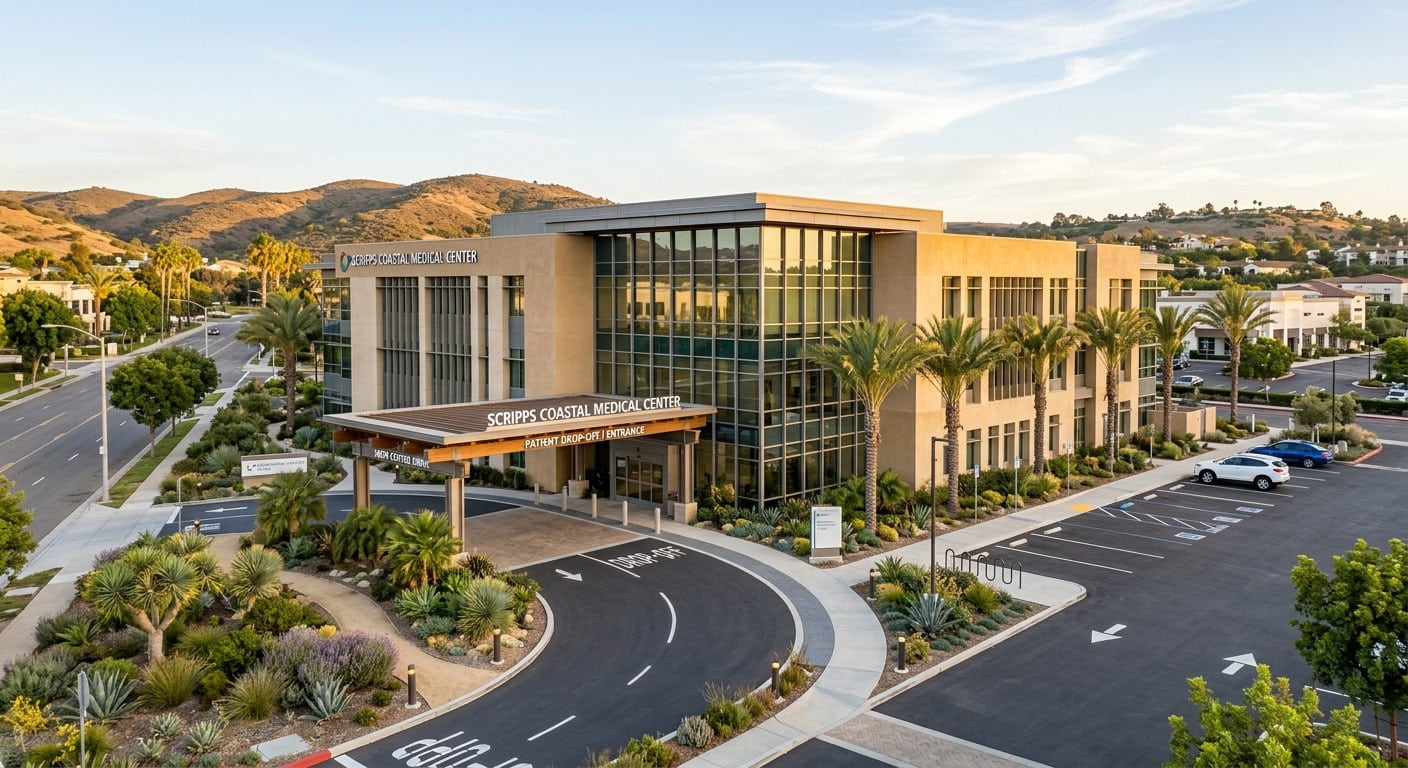
Now the good news. If you own or are buying a medical office building in San Diego County, you are in the best position of any commercial property owner in the region. I dont say that lightly.
| Metric | San Diego Medical Office | For Comparison |
|---|---|---|
| Overall MOB vacancy (Q2 2026) | 6.2% | Traditional office: 13.6% to 15%; life science: 26.9% (cycle high) |
| Class A MOB vacancy | Roughly 4% | Downtown office: 30%+ in some buildings |
| Class A MOB asking rent | Above $5.00 per SF per month gross, a first for the county | Class A general office: roughly $3.50 to $5.00 FSG |
| Most active tenant size | 1,800 to 4,000 SF | Small and mid-sized practices leading demand |
| Stabilized MOB cap rates | High 5s to mid 6s for well-leased suburban product; tighter on-campus | Nationally high 6s to low 8s, so San Diego trades at a premium |
What is driving this. Three things. Demographics, obviously, San Diego County has a large and aging population base with strong insurance coverage. Second, the health systems, Scripps, Sharp, UC San Diego Health, Kaiser, keep pushing outpatient services off campus into neighborhood locations. Third, and this is the one people miss, there is essentially no new medical office being built because construction costs and financing costs dont pencil at current rents. Zero speculative supply plus steady demand equals rent growth. Its not complicated.
The Flight to Built-Out Space
JLL called out something in their Q4 report that we are seeing in every MOB deal we work on. Tenants no longer want shell space with a TI allowance. They want move-in ready clinical buildouts. Plumbing in the walls, exam rooms framed, lead-lined imaging rooms already there. A 3,000 foot dental or dermatology practice cannot afford a 9 month buildout and $200 per foot in construction cost, so they will pay $5.50 gross for finished space over $4.00 for shell. Owners who invested in spec clinical buildouts over the last two years are being rewarded with faster lease-up and higher rents.
From a lending perspective this cuts both ways. Lenders love the tenant stickiness and the low vacancy. But medical buildouts are specialized, and if a tenant leaves, the re-tenanting cost is real. Expect lenders to hold back TI/LC reserves on MOB loans and to look hard at lease rollover in years 3 through 5. A building with staggered expirations and a mix of specialties will finance better than one with three leases all rolling in 2028.
The Life Science Overhang
One thing I want to flag. San Diego life science vacancy hit 26.9% in Q2, a cycle high. Torrey Pines, UTC, Sorrento Mesa. Some of that product is going to try to convert to medical office. Some of it will work. Most of it wont, because lab buildings are in the wrong locations for patient traffic and the floor plates are wrong. But it will create pockets of cheap “medical-adjacent” space that could put pressure on rents in specific submarkets. Its worth watching if you own MOB near a heavy lab cluster.
What San Diego Industrial and Medical Office Loans Look Like Right Now
Here is the practical part. These are approximate all-in rate ranges based on quotes we are seeing this week for San Diego industrial and medical office properties. Rates move daily and every deal is different, so treat these as a starting point for the conversation, not a rate sheet.
| Loan Type | Typical Structure | Approximate Rate (Sept 2026) | Best Fit |
|---|---|---|---|
| Bank / credit union permanent | 5, 7 or 10 year fixed, 25 year am, 65% to 70% LTV, recourse | 6.40% to 7.00% | Stabilized infill industrial, owner-occupied MOB |
| Life company permanent | 10 to 20 year fixed, 55% to 65% LTV, non-recourse | 6.25% to 6.85% | Class A medical office with credit tenants, low leverage industrial |
| CMBS | 10 year fixed, up to 70% LTV, non-recourse, interest only available | 6.75% to 7.50% | Multi-tenant industrial or MOB portfolios, cash-out refinances |
| Bridge / debt fund | Floating, SOFR + 300 to 450, 12 to 36 months, up to 75% LTC | 6.60% to 8.10% | Otay Mesa lease-up, MOB repositioning, value-add acquisitions |
| SBA 504 | 50% bank first / 40% CDC second / 10% down, 25 year fixed on the debenture | Blended roughly 6.25% to 6.75% | Owner-user industrial, physician-owned medical buildings |
| SBA 7(a) | Up to 90% LTV, Prime-based floating, 25 year am | Prime (6.75%) + 1.50% to 2.75% | Owner-user with working capital or equipment needs |
The Bridge vs. Permanent Decision Has Flipped
This is the part I want every San Diego borrower to understand. Twelve months ago, floating rate bridge debt was 150 to 200 basis points more expensive than fixed rate permanent debt. Today, with the 10-Year near 4.80% and SOFR near 3.62%, a low leverage bridge loan at SOFR + 300 is landing around 6.60%, which is about the same as a bank permanent loan. So the question is no longer “can I afford the bridge,” its “do I want to lock in 6.75% for ten years when the Fed might be hiking next week, or float for two years and see where this goes.”
My honest answer depends on the asset. For a stabilized medical office building with 8 years of weighted average lease term, lock it. You have a cash flow stream that justifies certainty. For an Otay Mesa warehouse at 60% occupancy, float it. Youre going to refinance again once its leased anyway, and prepayment flexibility is worth more than a fixed coupon right now.
SBA 504 for Owner-Users Is Underused in San Diego
One more thing. If you are a physician group, a dental practice, a contractor, a distributor, anyone who occupies at least 51% of your building, the SBA 504 program is the best money in the market and I am consistently surprised how few San Diego owner-users know about it. Ten percent down on a $6 million medical office condo. Twenty-five year fixed rate on the CDC portion at a rate that is set off the 10-Year Treasury. In a market where medical office rents just crossed $5 a foot, owning your space instead of renting it is a very good trade for a stable practice, and 504 is how you do it without tying up all your capital.
Frequently Asked Questions About the San Diego Commercial Real Estate Market
Is San Diego industrial real estate still a good investment in 2026?
Yes, but selectively. Countywide vacancy of 8.6% to 9.6% is the highest since 2012, and big box product in Otay Mesa is oversupplied in the near term. Infill small-bay and mid-bay industrial in Kearny Mesa, Miramar, and North County remains tight with 6% to 8% vacancy and continues to trade at low to mid 5% cap rates. The construction pipeline at 1.1 to 1.6 million SF is the smallest since 2020, so supply pressure eases from here.
What is the vacancy rate for medical office buildings in San Diego?
Overall medical office vacancy in San Diego County was 6.2% at the end of Q2 2026 according to Cushman & Wakefield. Class A medical office vacancy is roughly 4%. Compare that to traditional office at 13.6% to 15% and life science at 26.9%, and medical office is the healthiest commercial property type in the region.
What are current commercial real estate loan rates in San Diego?
As of September 2026, bank and life company permanent loans on San Diego industrial and medical office are pricing roughly 6.25% to 7.00% fixed, CMBS 6.75% to 7.50%, and bridge loans SOFR + 300 to 450 (about 6.60% to 8.10% all-in). SBA 504 blended rates for owner-users are roughly 6.25% to 6.75%. These move with the 10-Year Treasury (near 4.80%) and SOFR (near 3.62%) and should be confirmed the day you apply.
How much can I borrow on a San Diego medical office building?
Non-recourse lenders will typically go to 65% to 70% loan-to-value on a stabilized multi-tenant MOB with a diversified rent roll. Owner-users occupying 51% or more can reach 90% combined financing through SBA 504. Lenders will look closely at lease rollover, tenant specialty mix, and TI reserves given the specialized nature of clinical buildouts.
Is now a good time to refinance a San Diego industrial property?
If your loan matures in the next 18 months, start now. The 10-Year is at a three-year high and the Fed may hike in September, so waiting for lower fixed rates is a bet, not a plan. If your building is stabilized, lock a bank or life company loan. If you have lease-up or rollover risk, a floating rate bridge loan is priced nearly the same as permanent debt right now and gives you flexibility to refinance again when occupancy improves.
Does Financial Compound charge upfront fees?
No. Financial Compound represents borrowers exclusively and has never charged an upfront fee since 1996. We are paid at closing, so our interests are aligned with getting your San Diego loan funded on the best available terms.
Financing an industrial building or medical office in San Diego County? Financial Compound has placed over $6 billion in commercial real estate debt since 1996, representing borrowers only, with no upfront fees. We work with banks, life companies, CMBS, debt funds, and SBA lenders active across San Diego, Otay Mesa, Kearny Mesa, UTC, and North County. Call (310) 260-5900 x3, email info@commercialmortgagebroker.org, or visit our San Diego commercial mortgage broker page to start a conversation.
Market data referenced from Q1 and Q2 2026 reports published by Cushman & Wakefield, Kidder Mathews, Newmark, Savills, Colliers, Matthews, and JLL. Rate benchmarks from the Federal Reserve’s H.15 release and the New York Fed as of September 4, 2026. Loan pricing reflects indicative quotes and is not a commitment to lend.