
Securing office building financing in Los Angeles in 2026 looks nothing like it did three years ago. Vacancy rates are elevated, lender appetite is selective, and underwriting has tightened across every capital source touching the LA office market. Yet capital is still available for the right sponsor, the right asset, and the right business plan. This guide walks through how commercial office loans work in Los Angeles today, which lenders are actively quoting, what rates and terms to expect, and how to position a transaction so it actually closes.
Whether you own a Class A tower in Downtown LA, a creative office conversion in Culver City, a medical office building on the Westside, or a multi-tenant suburban property in the San Fernando Valley, the financing path looks different in 2026 than it did during the cheap-money cycle. Knowing the landscape before you go to market — or before you renew — saves months and often basis points.
The 2026 Los Angeles Office Market at a Glance
Before lenders quote on any office property, they start with the market. And the LA office market is genuinely bifurcated right now. Greater Los Angeles vacancy ranges from 15.9% (county-level Kidder Mathews data) to 25.5% (CBRE submarket-weighted), depending on the methodology, with Class A direct vacancy at roughly 20.6% countywide as of Q1 2026. Average asking rents have stabilized between $3.48 and $4.13 per square foot per month, full-service gross, depending on submarket and class.
The headline matters because it directly drives loan sizing. Lenders underwrite vacancy at higher levels than the market in most LA submarkets, apply more conservative rent growth assumptions, and stress-test debt service coverage at higher exit cap rates than they did pre-2023. For owners seeking office building financing, that translates into lower loan proceeds at the same value than the market would have produced two cycles ago.
Submarket Variation Matters More Than Ever
Lender views of “LA office” are no longer monolithic. A well-leased medical office building in Beverly Hills underwrites very differently from a 1980s-era multi-tenant building in Downtown’s East side, where vacancy has reached 58% in some pockets. Submarkets like Bunker Hill, Century City, El Segundo, and parts of the South Bay continue to attract capital. Older Downtown product, parts of the Tri-Cities, and certain Mid-Wilshire blocks face a steeper climb.
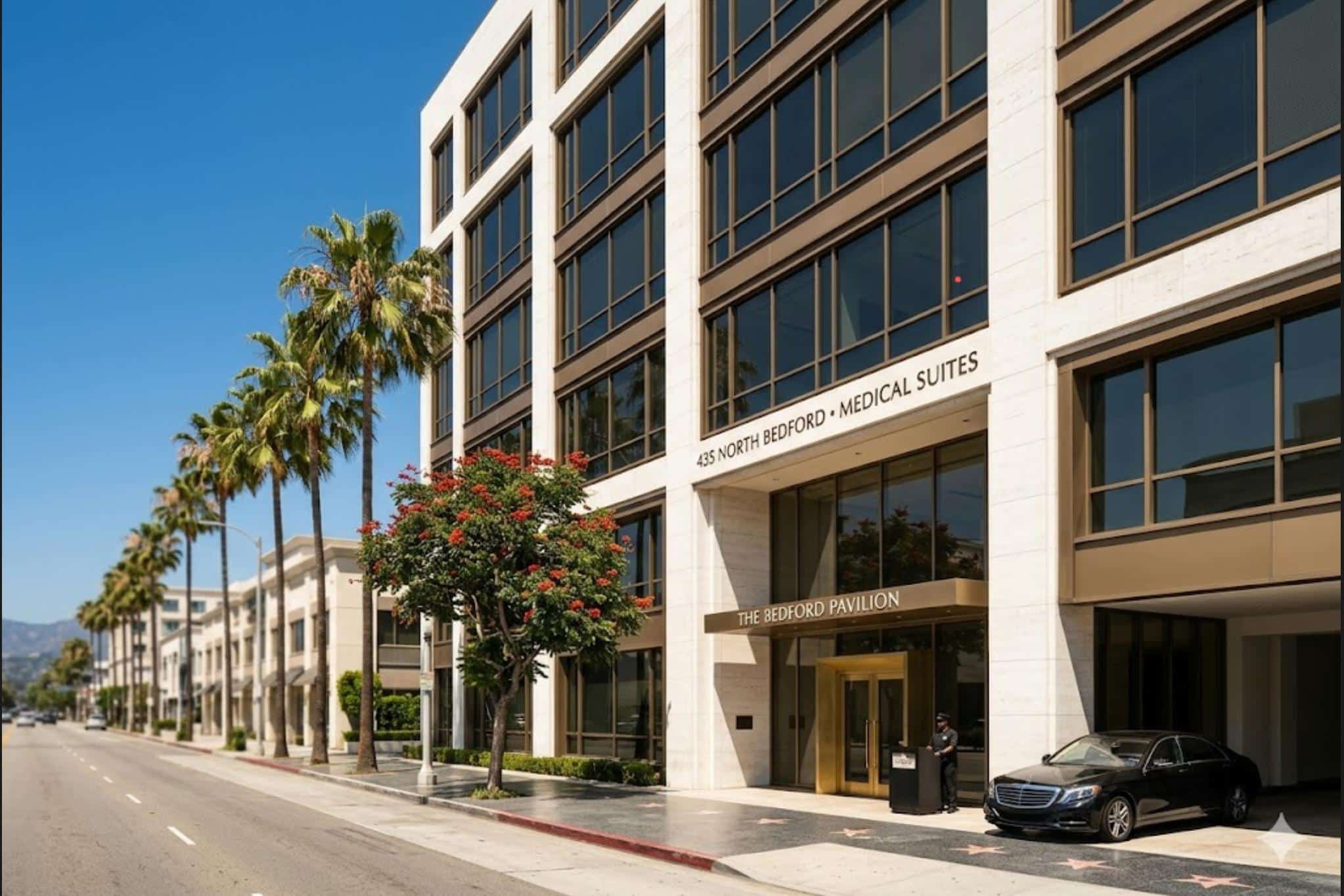
The implication for a borrower: identifying which lenders are active in your specific submarket matters more than chasing the lowest headline rate. A bank with conviction in the Westside medical office may quote 75 basis points tighter than a bank approaching the same building generically.
Types of Office Building Financing Available in Los Angeles
Office owners in Los Angeles have access to several distinct capital sources in 2026. Each one prices and structures commercial office loans differently, and each has its own sweet spot.
Bank and Credit Union Office Loans
Local and regional banks remain a core source of office building financing in Los Angeles, particularly for owner-users and stabilized smaller assets under $15 million. Banks typically offer recourse loans with five-, seven-, or ten-year terms, amortization of 25 to 30 years, and pricing tied to the corresponding Treasury or to SOFR plus a spread. Many LA-area banks have pulled back on multi-tenant investor office in 2024 and 2025, but credit unions and select community banks have stepped into the gap for relationship borrowers.
Expect personal guarantees on most bank deals, lower leverage than in the prior cycle (typically 55% to 65% loan-to-value on investor properties), and meaningful deposit-relationship requirements at some institutions.
CMBS (Conduit) Loans for Office Buildings
The CMBS market remains open for office in 2026, but it is highly selective. Lenders prefer Class A or Class B+ properties with strong rent rolls, longer weighted-average lease terms (typically 5+ years remaining), and limited near-term rollovers. CMBS loans are non-recourse (with standard carve-outs), fixed-rate, and amortize over 25 to 30 years, with a typical 10-year term and balloon payment. Pricing in 2026 runs in the high-6% to mid-7% range for most office paper, with significant variation based on tenant credit, location, and rollover profile.
CMBS is often the right call for mid-size to large office assets ($10 million and up) where the sponsor wants non-recourse, fixed-rate, long-term capital and is willing to accept defeasance or yield maintenance on prepayment.
Debt Funds and Bridge Lenders
For office assets that need a story — a lease-up, a renovation, a tenant rollover bridge, or a discount-to-basis acquisition — debt funds and bridge lenders are the most active capital source in Los Angeles in 2026. Bridge financing for office typically runs 12 to 36 months, priced at SOFR plus 350 to 600 basis points (delivering all-in rates often between 7.5% and 10% in today’s environment), and is sized to the business plan rather than purely to current cash flow.
Bridge debt is the right tool when a property’s value is being created, not yet stabilized. It is the wrong tool when an owner is simply hoping rates will come down. Good bridge structures include defined exit — sale, refinance, or stabilization — milestones before the loan is signed.
Life Insurance Company Office Loans
Life companies remain the most conservative — and most attractive — source of long-term commercial office loans for the right asset. Life-co lenders in 2026 are targeting Class A office in core LA submarkets, with low leverage (typically 50%-60% LTV), strong tenancy, and sponsors with institutional-quality track records. In exchange, they offer non-recourse, fixed-rate, long-term (10- to 20-year) money at the tightest spreads in the market — often 150 to 225 basis points over the corresponding Treasury, depending on the deal.
If a property and sponsor qualify for life-company financing, it is almost always the right answer. The challenge is that the box is narrow. Many LA office buildings do not fit.
SBA 504 and 7(a) for Owner-Occupied Office
Office building financing in Los Angeles takes on a completely different shape when the borrower is an owner-occupant. A medical practice buying its building, a law firm purchasing a small office tower, or an operating business acquiring its headquarters can access SBA 504 financing at up to 90% loan-to-cost (10% down), with the SBA debenture portion fixed for 25 years at well-below-market rates. SBA 7(a) is also available for owner-occupied office acquisition, refinance, and tenant improvement financing.
SBA programs are paperwork-heavy and slower than conventional bank loans, but for qualifying owner-users, they produce by far the most attractive economics available in the office space.
Current Office Building Loan Rates and Terms in Los Angeles (Mid-2026)
Rates on office building financing in Los Angeles fluctuate daily with the underlying indexes. As of mid-2026, the relevant benchmarks are SOFR at approximately 3.59% and the 10-Year Treasury at approximately 4.45%. Office spreads remain wider than other asset classes — that is the price of the sector’s current uncertainty. The table below gives a working snapshot of typical terms across the major capital sources for Los Angeles office in mid-2026.
| Capital Source | Typical LTV | Term | Indicative Rate | Recourse |
|---|---|---|---|---|
| Local / Regional Bank | 55%–65% | 5–10 yr | 6.75%–7.75% | Yes (typical) |
| Credit Union | 60%–70% | 5–10 yr | 6.50%–7.50% | Yes |
| CMBS / Conduit | 55%–65% | 10 yr | 6.85%–7.50% | Non-recourse* |
| Life Insurance Company | 50%–60% | 10–20 yr | 6.00%–6.85% | Non-recourse |
| Debt Fund / Bridge | 65%–75% LTC | 1–3 yr | 7.50%–10.00% | Varies |
| SBA 504 (owner-user) | up to 90% LTC | 25 yr fixed (debenture) | SBA debenture + bank blend | Yes |
*Standard non-recourse carve-outs apply. Rates are indicative ranges as of mid-2026 and vary materially by sponsor, property, submarket, and structure. Quoted ranges should not be treated as offers of credit.
What Lenders Underwrite on Los Angeles Office Loans
Securing commercial office loans in 2026 requires understanding what a lender is actually trying to solve. Loan committee questions for the LA office in the 2026 cluster around a consistent set of issues.
Rent Roll and Lease Rollover
Lenders dissect the rent roll. They want to see the weighted-average lease term, the rollover schedule (how much square footage rolls over in years one through five), the credit quality of major tenants, and recent leasing velocity. A building with 50% of its income rolling in the next 24 months will be sized conservatively — or financed only with a bridge plus a structured TI/LC reserve.
Debt Service Coverage and Debt Yield
Most Los Angeles office lenders in 2026 are underwriting to a minimum debt service coverage ratio of 1.30x to 1.40x on actual or trailing in-place income, not pro forma. Many CMBS and life-co lenders also size to a minimum debt yield — typically 9% to 11% — which has become the binding constraint on loan size in a higher-rate environment.
Sponsor Track Record and Liquidity
Office is no longer a sleepy core asset class. Lenders want sponsors who have operated an office in a difficult market, who have post-closing liquidity, and who have credible business plans for tenant retention, capital expenditure, and lease-up. Net worth equal to the loan amount and liquidity equal to 10% of the loan amount remains a common informal benchmark.
Capital Expenditure and TI/LC Reserves
Almost every Los Angeles office loan written in 2026 includes structured reserves for tenant improvements, leasing commissions, and capital expenditures. The reserve sizing depends on the rollover schedule. Sponsors should budget for higher reserve holdbacks than in the last cycle and walk into financing conversations with a credible cap-ex plan.
How to Position a Los Angeles Office Building for Financing
The sponsors closing the cleanest office building financing in Los Angeles in 2026 share a few patterns. They show up to lender meetings with a coherent story, complete documentation, and a realistic view of where the asset sits in the market.
- Lead with the leasing story. Whether the building is stabilized or in lease-up, the leasing narrative drives every conversation with lenders. Have the current rent roll, the rollover schedule, recent comps, and the leasing pipeline ready on day one.
- Be honest about the business plan. Lenders can read a market. A pro forma that assumes 2019 rent growth and 5% vacancy will be discounted immediately. Conservative, well-supported assumptions build credibility.
- Bring institutional-quality documents. A full property condition report, environmental Phase I, current ALTA survey, and three years of operating statements move a deal faster than any rate negotiation.
- Show the sponsor’s balance sheet clearly. Personal financial statement, schedule of real estate owned, contingent liabilities, and recent tax returns. Make the lender’s diligence easy.
- Run a real lender process. The single biggest mistake LA office owners make in 2026 is calling two lenders and taking the better quote. The market is fragmented. Capital sources price the same property within a 100-basis-point range. A proper process surfaces that spread.
Refinancing Los Angeles Office Buildings in 2026
A meaningful share of the LA office financing conversation in 2026 centers on refinancing — specifically, loans originated in 2014 through 2019 that are now maturing into a very different rate environment. Owners holding a 10-year CMBS loan at 4.25% who must now refinance at 7%-plus face a cash-in refinance, a structured bridge, a recap, or a sale.
The right path depends on the property’s underlying performance, the sponsor’s basis, and the equity behind the deal. There is no single answer. A bridge loan is sometimes the right tool to buy time for lease-up before a permanent take-out. A cash-in refinance to a life company may make sense for a well-tenanted asset where the sponsor has deep conviction. In some cases, the right answer is to bring in fresh equity, recapitalize, and reset the basis.
What unites the right answers is a clear-eyed view of the asset, the market, and the capital stack — produced before the loan matures, not after.
Why Work with an Independent Commercial Mortgage Broker
Financing an office building in Los Angeles in 2026 requires speaking with lenders across at least four capital sources to know where the market is. Few owners have the relationships, the time, or the volume to do that efficiently. An independent commercial mortgage broker who represents borrowers — not lenders — surfaces capital from sources the owner would not otherwise reach, runs a controlled process, and negotiates terms beyond the headline rate.
Financial Compound has financed over $6 billion in commercial real estate since 1996. We work exclusively as a borrower-side advocate, take no fees from lenders, and charge no upfront fees. For Los Angeles office building financing in 2026, that independence matters: the goal is the right capital source for your asset and your plan, not the easiest deal for the broker.
Ready to Discuss Office Building Financing in Los Angeles?
Free initial consultation. 24-hour response. No upfront fees.
Frequently Asked Questions About Office Building Financing in Los Angeles
What credit score is needed for commercial office loans in Los Angeles?
Most institutional lenders for Los Angeles office building financing look for sponsor FICO scores of 680 or higher, though life companies, CMBS, and debt funds focus more on sponsor net worth, liquidity, and track record than on personal credit. SBA 504 financing for owner-occupied office typically requires scores of 680+ and demonstrated business cash flow.
How much down payment is required for an office building loan in LA?
Conventional investor office financing in Los Angeles in 2026 typically requires 35% to 45% equity, given lender LTV constraints of 55% to 65%. Owner-occupied office buildings financed through SBA 504 can go as low as 10% down. Bridge loans typically require 25% to 35% equity to loan-to-cost.
How long does it take to close an office building loan in Los Angeles?
Bank loans on stabilized office assets typically close in 45 to 75 days. CMBS office loans take 60 to 90 days. Life company loans often take 75 to 120 days. SBA 504 transactions for owner-occupied office can take 90 to 120 days. Bridge loans are the fastest, sometimes closing in 30 to 45 days for clean assets.
Can I get non-recourse financing on a Los Angeles office building?
Yes. CMBS conduit loans and life insurance company loans are typically non-recourse, subject to standard carve-outs for fraud, willful misconduct, and environmental issues. Most banks require full or partial recourse on office loans in the current environment, though some non-recourse structures are available at lower leverage for strong sponsors.
Are there office building financing options for buildings with high vacancy?
Yes — bridge loans and debt funds actively finance Los Angeles office buildings with vacancy and lease-up business plans. These loans are typically sized to loan-to-cost rather than current cash flow, priced wider than stabilized financing, and run 12 to 36 months with a defined exit. The key is a credible, fundable business plan to reach stabilization.
Does Financial Compound charge upfront fees for office building financing?
No. Financial Compound charges no upfront fees. We are compensated only at closing, only on transactions we successfully place. Initial consultations on financing for Los Angeles office buildings are free. Call 310-260-5900 x3 to discuss your specific transaction.
Closing Thoughts on Los Angeles Office Building Financing in 2026
The 2026 Los Angeles office market is challenging, selective, and very real. Office building financing in Los Angeles remains available from banks, credit unions, life companies, CMBS, debt funds, and SBA programs, but the path to closing is narrower than in the prior cycle. The deals that close in 2026 are those that are properly positioned, marketed to the right capital, and structured around the actual market — not the market the sponsor wishes existed.
For owners and investors evaluating commercial office loans in Los Angeles — whether for acquisition, refinance, recapitalization, or bridge — the value of an experienced, independent advocate is higher in 2026 than it has been in a decade. Financial Compound has navigated multiple LA office cycles since 1996 and continues to place capital for office owners across all submarkets and property classes in the region.